
Social Computing and Social Media Analytics: Learning Beyond the Scroll
Home » Social Computing and Social Media Analytics: Learning Beyond the Scroll
We live in a time where a single post, tweet, or reel can reach thousands , sometimes millions within minutes. Social media is no longer just a place for sharing photos or opinions, it has become a powerful digital space where conversations shape trends, influence decisions, and reflect the pulse of society. For educators in engineering and technology, this shift opens an exciting opportunity to bring subjects like Social Computing and Social Media Analytics into the classroom.
Social Computing helps us understand how technology enables people to interact, collaborate, and build communities online. Every “like,” “comment”, or “share” is not just an action, it is a small part of a much larger network of human interaction.
Erik Qualman, author of Socialnomics and one of the most influential voices in social media analytics, once said, “We don’t have a choice on whether we do social media; the question is how well we do it.”
This statement perfectly captures the reality of today’s digital world, where social media is deeply embedded in how people communicate, share information, and influence opinions.
When students begin to see social platforms through this lens, the familiar apps they use every day suddenly become fascinating systems to study.
This is where Social Media Analytics comes into the picture. If social computing explains the behavior, social media analytics studies the data behind that behavior. Millions of posts, hashtags, and comments create a digital footprint that can be analyzed using technology. With the help of machine learning and natural language processing,we can understand public sentiment, identify emerging trends, and even study how information spreads across networks.
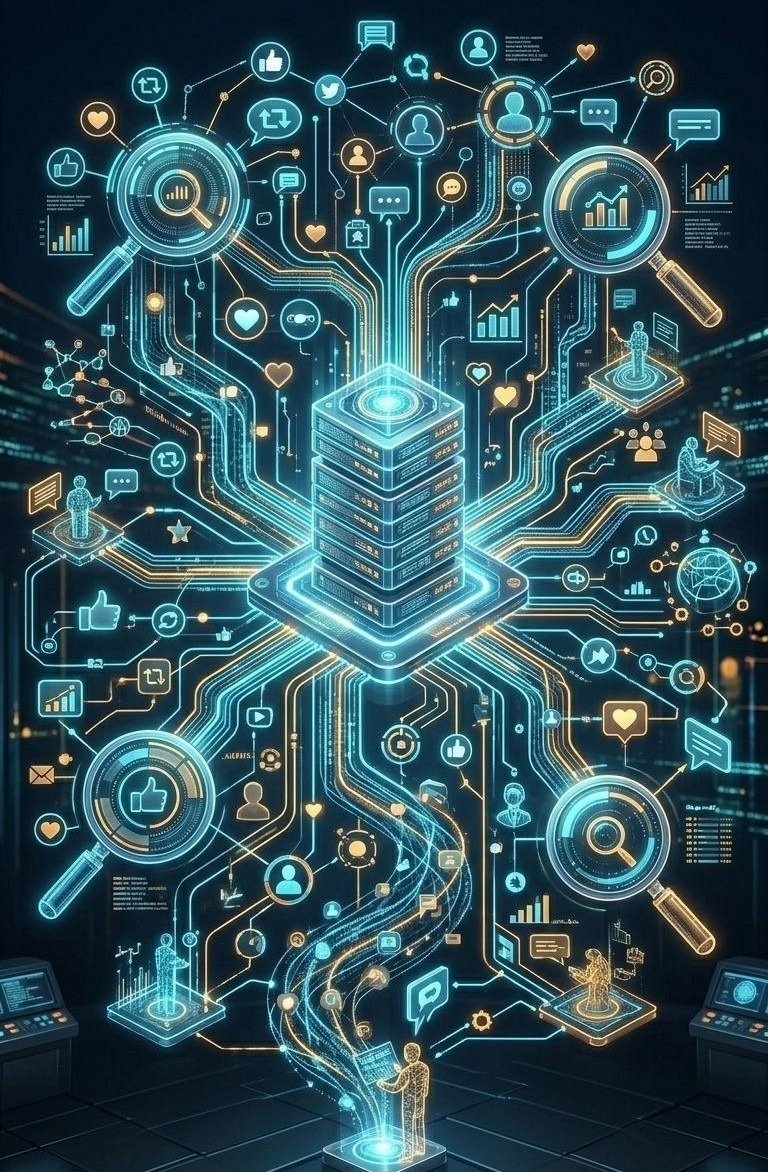
Technology leaders often remind us that the real power of the digital age lies in data. Tim O’Reilly once said, “We’re entering a new world in which data may be more important than software.” Social media platforms are among the richest sources of such data, offering endless opportunities for students to explore, analyze, and innovate.
For Gen Z students, this field feels naturally relatable. They are already digital native, comfortable navigating online spaces, understanding trends, and engaging with digital communities. Introducing them to subjects like Social Computing and Social Media Analytics allows them to move from being users of technology to analysts and creators of technology.
Imagine a classroom where students analyze how a hashtag goes viral, perform sentiment analysis on tweets about a global event, or visualize how information flows through a network of users. Suddenly, concepts from data science, artificial intelligence, and machine learning become real and meaningful.
At the same time, these discussions naturally lead to deeper questions about ethics, privacy, and responsible technology use. In a world where digital information spreads rapidly, understanding the responsibility that comes with analyzing and designing such systems is equally important.
By introducing Social Computing and Social Media Analytics in engineering education, we give students the chance to combine their curiosity about the digital world with powerful analytical tools. The result is not just better technologists, but thoughtful innovators who understand both technology and the society it serves.
After all, in today’s connected world, learning sometimes begins with a simple scroll, but it can lead to discoveries far beyond the screen.
Sayali D. Joshi
Assistant Professor
Department of Information Technology
MMCOE, Pune