
Blockchain Technology: Transforming Trust in the Digital Age
Home » Blockchain Technology: Transforming Trust in the Digital Age
I still remember a moment from one of my interactive sessions when a student asked a simple yet thought-provoking question: “Ma’am, in this technology-driven age full of digital transactions, whom should we really trust, and how do we identify threats?” The question lingered with me. As educators, we consistently emphasize values like integrity and transparency, yet the realities of the digital world often challenge these very principles, making trust more complex and uncertain.
This is where blockchain technology becomes highly relevant, especially for students. It offers a powerful solution to the very concern raised—by enabling secure, transparent, and tamper-resistant systems that do not rely on a central authority. As an emerging technology transforming industries such as finance, healthcare, supply chain, and digital services, blockchain helps students understand how trust can be established through technology itself. It opens pathways to careers in Web3, cryptocurrency, smart contract development, and cyber security. For engineering students, it strengthens core knowledge in distributed systems, cryptography, and secure application development. Ultimately, understanding blockchain equips students to navigate and innovate in a digital economy where trust is built not just on people, but on robust technological frameworks.
In the rapidly evolving digital world, the need for secure, transparent, and reliable systems has become more important than ever. Blockchain has emerged as a revolutionary solution to these challenges. Initially started with cryptocurrencies, blockchain has now expanded into various industries including finance, healthcare, supply chain management, education, and governance.
Blockchain is a distributed and decentralized digital ledger that records transactions across multiple computers in a secure and transparent way. Instead of storing data in a single centralized database, blockchain distributes the information across a network of nodes. Each transaction is grouped into a block, and these blocks are linked together in chronological order, forming a chain—hence the name blockchain. One of the key features of blockchain is that once information is recorded, it is extremely difficult to alter or delete, making the system highly secure and trustworthy.
In recent years, Blockchain Technology has evolved from being the backbone of cryptocurrencies to becoming a transformative digital infrastructure with applications across multiple sectors. Ginni Rometty (Former CEO of IBM) rightly pointed out the importance as : “What the internet did for communications, blockchain will do for trusted transactions.”
Blockchain opens new avenues for research in distributed systems, cryptography, cybersecurity, data governance, and digital trust frameworks. The technology also encourages interdisciplinary collaboration across fields such as computer science, economics, law, and public policy. One can surely say as “Blockchain: Building trust through code.”
One of the most promising aspects of blockchain lies in its ability to support smart contracts—self-executing agreements that automatically enforce predefined conditions. These programmable contracts are reshaping areas such as digital finance, supply chain automation, digital identity management, and decentralized applications (DApps).
Ultimately, blockchain represents more than a technological trend—it reflects a broader shift toward decentralized trust, transparency, and collaborative digital ecosystems.
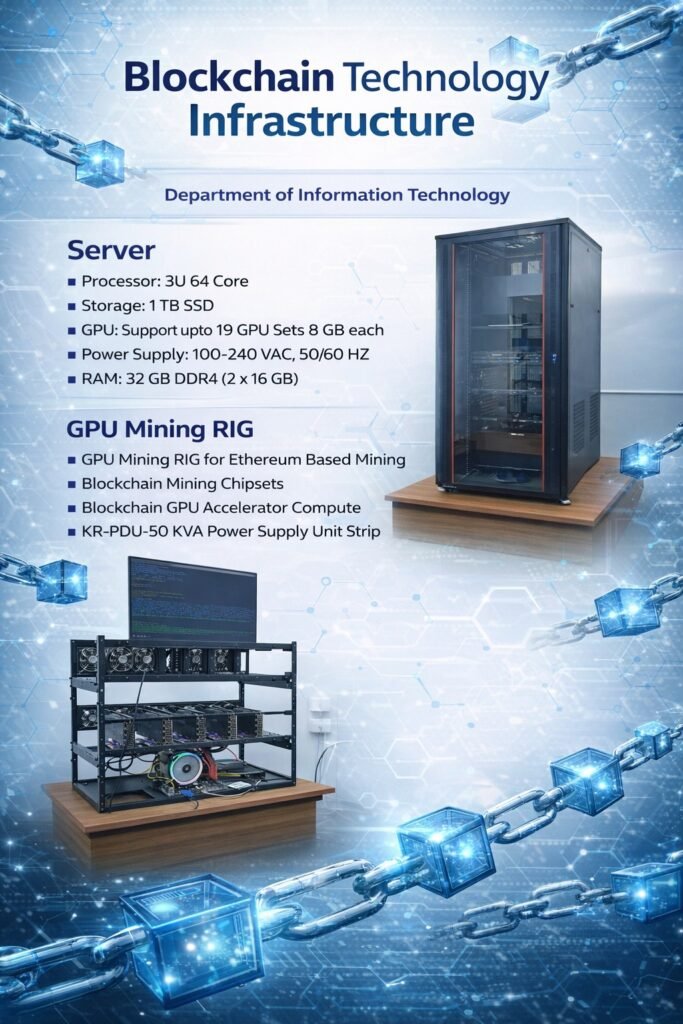
As educators and researchers, the opportunity lies in exploring how blockchain can contribute not only to technological advancement but also to building secure, transparent, and trustworthy digital systems for the future. It is a new paradigm for trust in the digital age. In the Information Technology Department, at Marathwada Mitra Mandal’s College of Engineering we have a Blockchain Technology Excellence Center open for all researchers.
Dr. Swapnaja Ubale
Professor & Head Information Technology
Marathwada Mitra Mandal’s College of Engineering,
Pune