Information Technology
Home » UG Programme » Information Technology » About Department

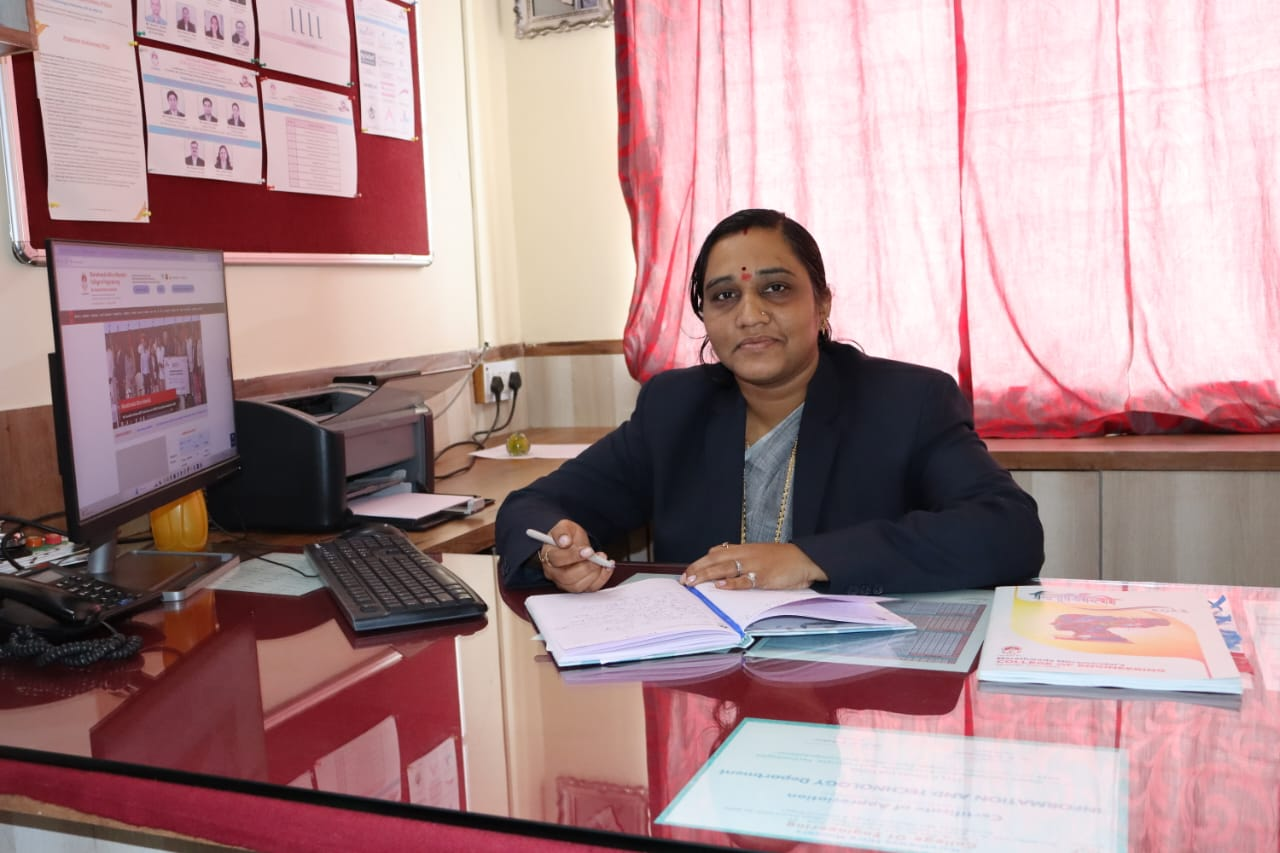
Head of Department of Information Technology Engineering
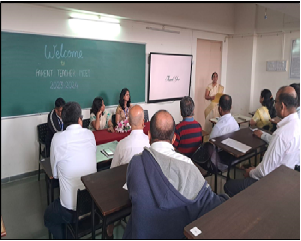
Welcome to the Information Technology Department at MMCOE, an institution renowned for its commitment to excellence in technical education.
Since its inception in 2006, the IT Department has been at the forefront of imparting quality education in the field of Information Technology. We have been an autonomous institute in affiliation with SPPU, offering a comprehensive B. Tech in Information Technology program, with an intake capacity of 180 students, alongside a specialized M. Tech in Data Science program with an intake of 6 students.
Our primary mission is to equip students with the knowledge and skills required to tackle the challenges of an ever-evolving technological landscape. We focus on developing expertise in cutting-edge areas such as data management, communication, product development, and the application of IT solutions across various domains, including business, engineering, and the sciences.
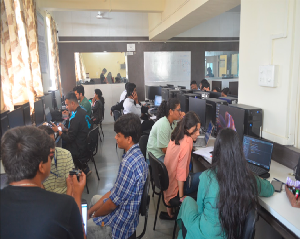
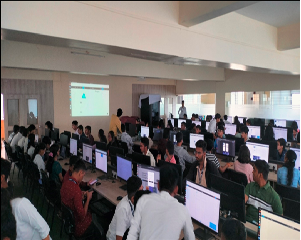
The department is proud to offer a blend of modern teaching methodologies, complemented by highly qualified faculty members who provide personalized attention to foster both academic and personal growth. Our state-of-the-art laboratories and classrooms are designed to enhance the overall learning experience, ensuring our students are well-prepared to face the real-world challenges of the technology sector.
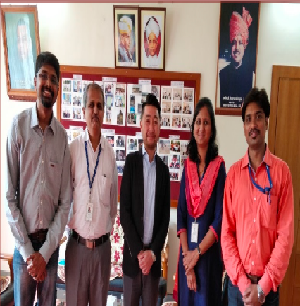
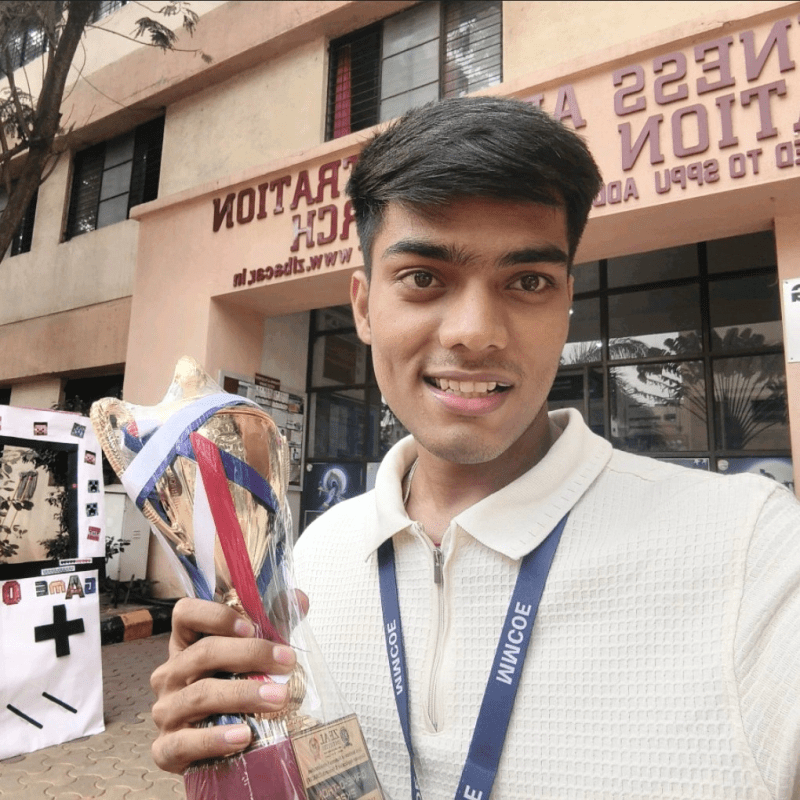
Our Training and Placement (T&P) cell works tirelessly to connect students with top-tier software companies, ensuring a high rate of placement for eligible students. In addition to academics, we encourage participation in intercollegiate events, where our students have consistently achieved recognition and accolades.
At the IT Department, MMCOE, we are committed to preparing our students to be industry-ready professionals, capable of excelling in a dynamic and fast-paced technological world.


Department Highlights
- Centre of Excellence in Blockchain Technology
- Centre of Excellence in Computational Intelligence
- Skill Development Program In association with TechMahindraLtd.
- Blockchain Lab in association with IEEE Pune Blockchain Group
- IIT Bombay Spoken Tutorial Nodal Centre
- IITB Virtual Lab Nodal Centre
- AgileSoft Sponsored Project Lab
- ATS Infotech Sponsored IOT Lab
- Industry collaboration
- International placements and internships
- Best Academic practices
- Active Student Club, Associations and Professional chapters
- Student - Mentor System and remedial teaching
- Industrial visits, Workshops, Technical events, Guest lectures, Seminars
- Professional mentor to learn Foreign languages : Japanese and German Language
- Skill Development Programs
Vision
To emerge as a globally competent center in education, research and innovation in Information Technology, fostering sustainable development with a holistic vision.
Mission
- M1 : To impart IT education that develops globally competent professionals
- M2 : To promote innovation through research and entrepreneurship.
- M3 : To encourage lifelong learning and a holistic commitment towards societal development.
Program Educational Objectives (PEOs)
The students of Information Technology Department after passing out will
- PEO1: Exhibit the capabilities to excel as IT professionals with strong  knowledge and innovative thinking.
- PEO2:Demonstrate leadership in IT Industry, pursue lifelong learning and contribute through research & collaboration.
- PEO3:Apply innovations and ethical practices for sustainable technological advancement and societal enrichment.
Knowledge and Attitude Profile (WK)
- WK1: A systematic, theory-based understanding of the natural sciences applicable to the discipline and awareness of relevant social sciences.
- WK2: Conceptually-based mathematics, numerical analysis, data analysis, statistics and formal aspects of computer and information science to support detailed analysis and modelling applicable to the discipline.
- WK3: A systematic, theory-based formulation of engineering fundamentals required in the engineering discipline.
- WK4: Engineering specialist knowledge that provides theoretical frameworks and bodies of knowledge for the accepted practice areas in the engineering discipline; much is at the forefront of the discipline.
- WK5: Knowledge, including efficient resource use, environmental impacts, whole-life cost, re-use of resources, net zero carbon, and similar concepts, that supports engineering design and operations in a practice area.
- WK6: Knowledge of engineering practice (technology) in the practice areas in the engineering discipline.
- WK7: Knowledge of the role of engineering in society and identified issues in engineering practice in the discipline, such as the professional responsibility of an engineer to public safety and sustainable development.
- WK8: Engagement with selected knowledge in the current research literature of the discipline, awareness of the power of critical thinking and creative approaches to evaluate emerging issues.
- WK9: Ethics, inclusive behavior and conduct. Knowledge of professional ethics, responsibilities, and norms of engineering practice. Awareness of the need for diversity by reason of ethnicity, gender, age, physical ability etc. with mutual understanding and respect, and of inclusive attitudes.
Programme Outcomes (POs)
A Graduate of the Computer Engineering Program will be able to
PO1: Engineering Knowledge: Apply knowledge of mathematics, natural science, computing, engineering fundamentals and an engineering specialization as specified in (WK1 to WK4) respectively to develop the solution of complex engineering problems.
PO2: Problem Analysis: Identify, formulate, review research literature and analyze complex engineering problems reaching substantiated conclusions with consideration for sustainable development. (WK1 to WK4)
PO3: Design/Development of Solutions: Design creative solutions for complex engineering problems and design/develop systems/components/processes to meet identified needs with consideration for the public health and safety, whole-life cost, net zero carbon, culture, society and environment as required. (WK5)
PO4: Conduct Investigations of Complex Problems: Conduct investigations of complex engineering problems using research-based knowledge including design of experiments, modelling, analysis & interpretation of data to provide valid conclusions. (WK8).
PO5: Engineering Tool Usage: Create, select and apply appropriate techniques, resources and modern engineering & IT tools, including prediction and modelling recognizing their limitations to solve complex engineering problems. (WK2 and WK6)
PO6: The Engineer and The World: Analyze and evaluate societal and environmental aspects while solving complex engineering problems for its impact on sustainability with reference to economy, health, safety, legal framework, culture and environment. (WK1, WK5, and WK7).
PO7: Ethics: Apply ethical principles and commit to professional ethics, human values, diversity and inclusion; adhere to national & international laws. (WK9)
PO8: Individual and Collaborative Team work: Function effectively as an individual, and as a member or leader in diverse/multi-disciplinary teams.
PO9: Communication: Communicate effectively and inclusively within the engineering community and society at large, such as being able to comprehend and write effective reports and design documentation, make effective presentations considering cultural, language, and learning differences
PO10: Project Management and Finance: Apply knowledge and understanding of engineering management principles and economic decision-making and apply these to one’s own work, as a member and leader in a team, and to manage projects and in multidisciplinary environments.
PO11: Life-Long Learning: Recognize the need for, and have the preparation and ability for i) independent and life-long learning ii) adaptability to new and emerging technologies and iii) critical thinking in the broadest context of technological change. (WK8)
Programme Specific Outcomes (PSOs)
Information Technology Graduates will be able to:
- PSO1: Design and develop information systems using principles of computing to solve real-world problems.
- PSO2: Integrate emerging IT technologies to innovate and improve technological ecosystems.
Toppers List 2024-25
Second Year
Third Year
Final Year
Our Recruiters


IT Engineering
Our Recruiters